
Publications
Featured Shape modeling Generative models
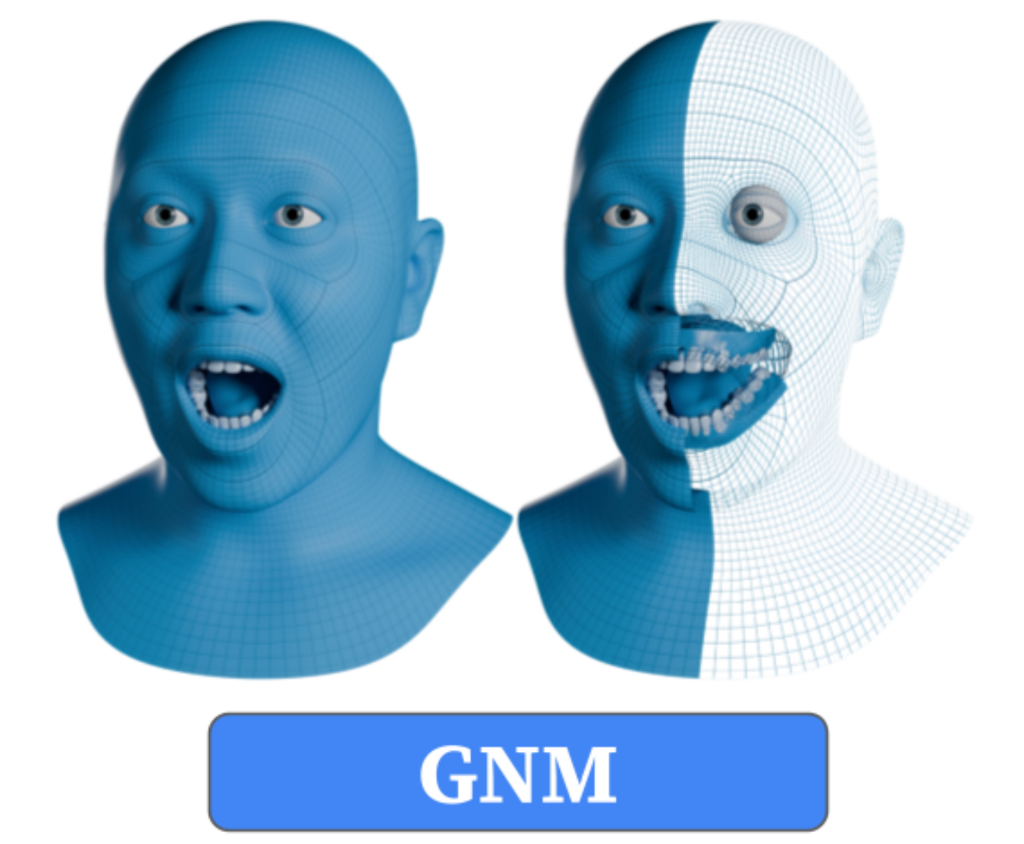
GNM Head: A Generative aNthropometric Model of the human head
Parametric models of the human head are essential tools in computer vision, graphics, and generative AI. We introduce the Generative aNthropometric Model (GNM), a comprehensive 3D head model...
Face capture & animation
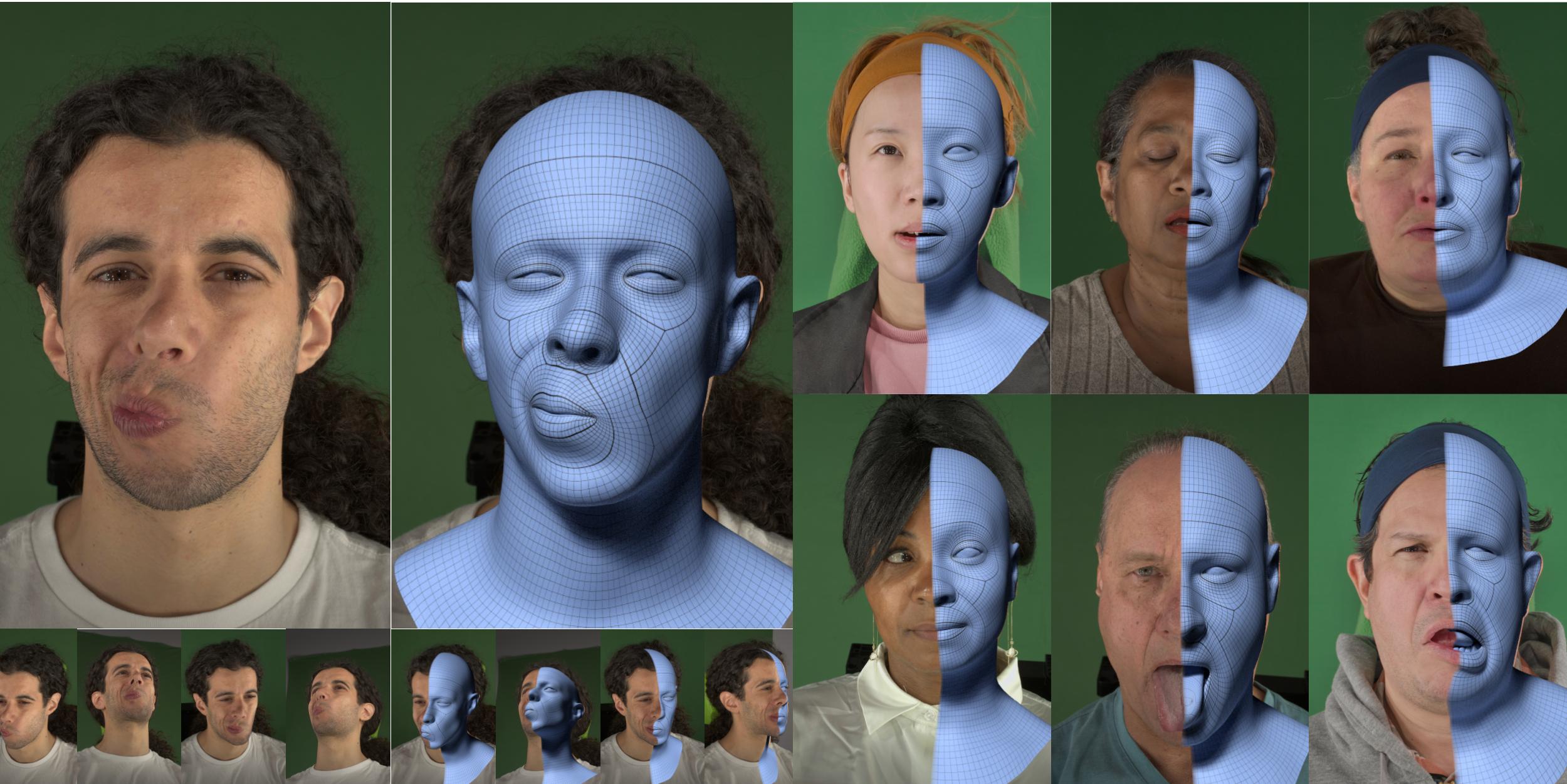
Topologically Consistent Multi-view 3D Head Reconstruction via Coarse-Guided Layered Surface Sampling
From calibrated multi-view images, SHELLS reconstructs 18k-vertex 3D heads in 0.08 seconds. It aggregates DinoV2 features via projective surface-aware feature sampling, allowing a transformer to predict dense semantic...
Featured Shape modeling Face capture & animation Neural representations
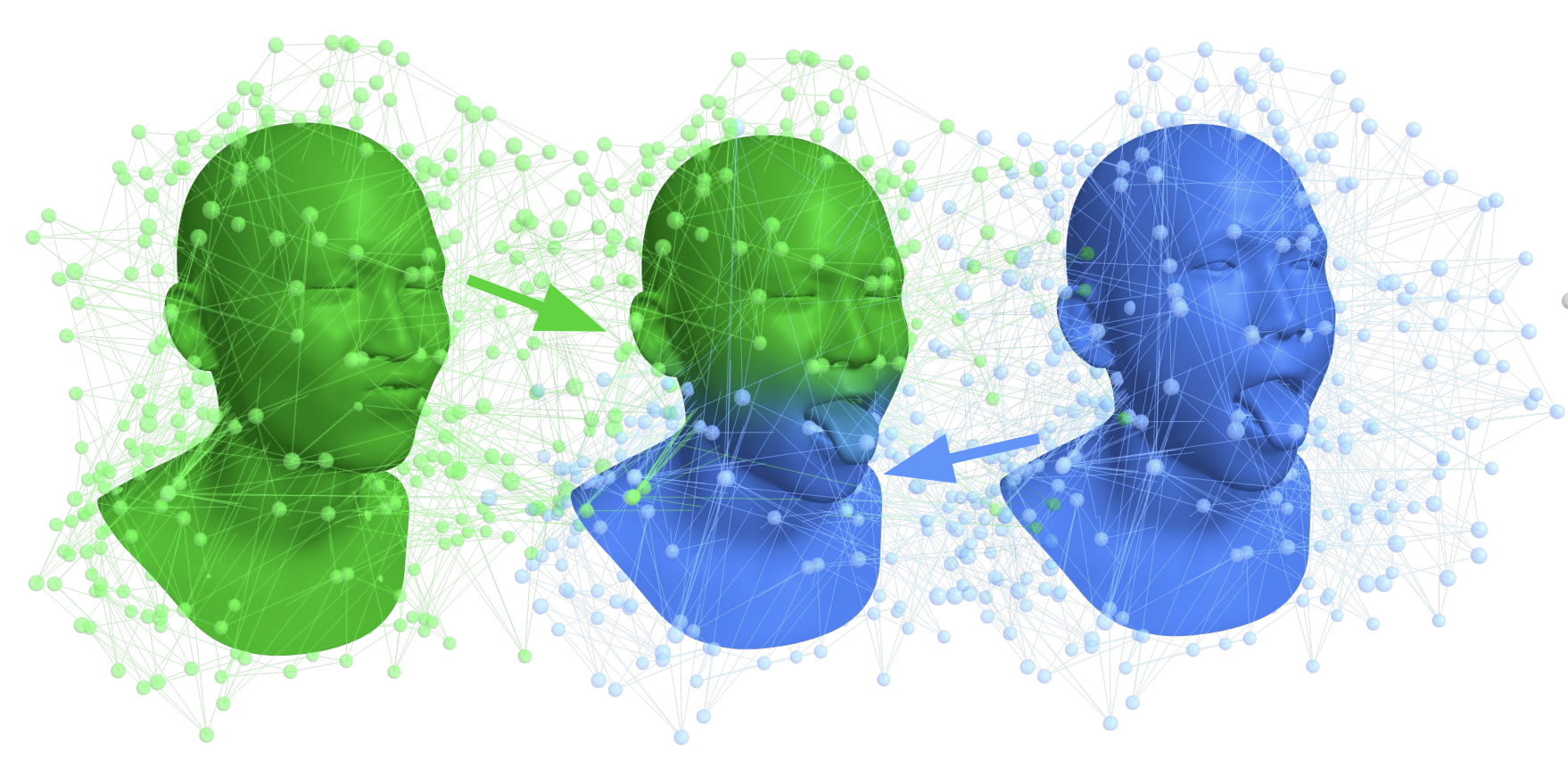
Representing 3D Faces with Learnable B-spline Volumes
We present CUBE (Control-based Unified B-spline Encoding), a new geometric representation for human faces that combines B-spline volumes with learned features, and demonstrate its use as a decoder...
Generative models
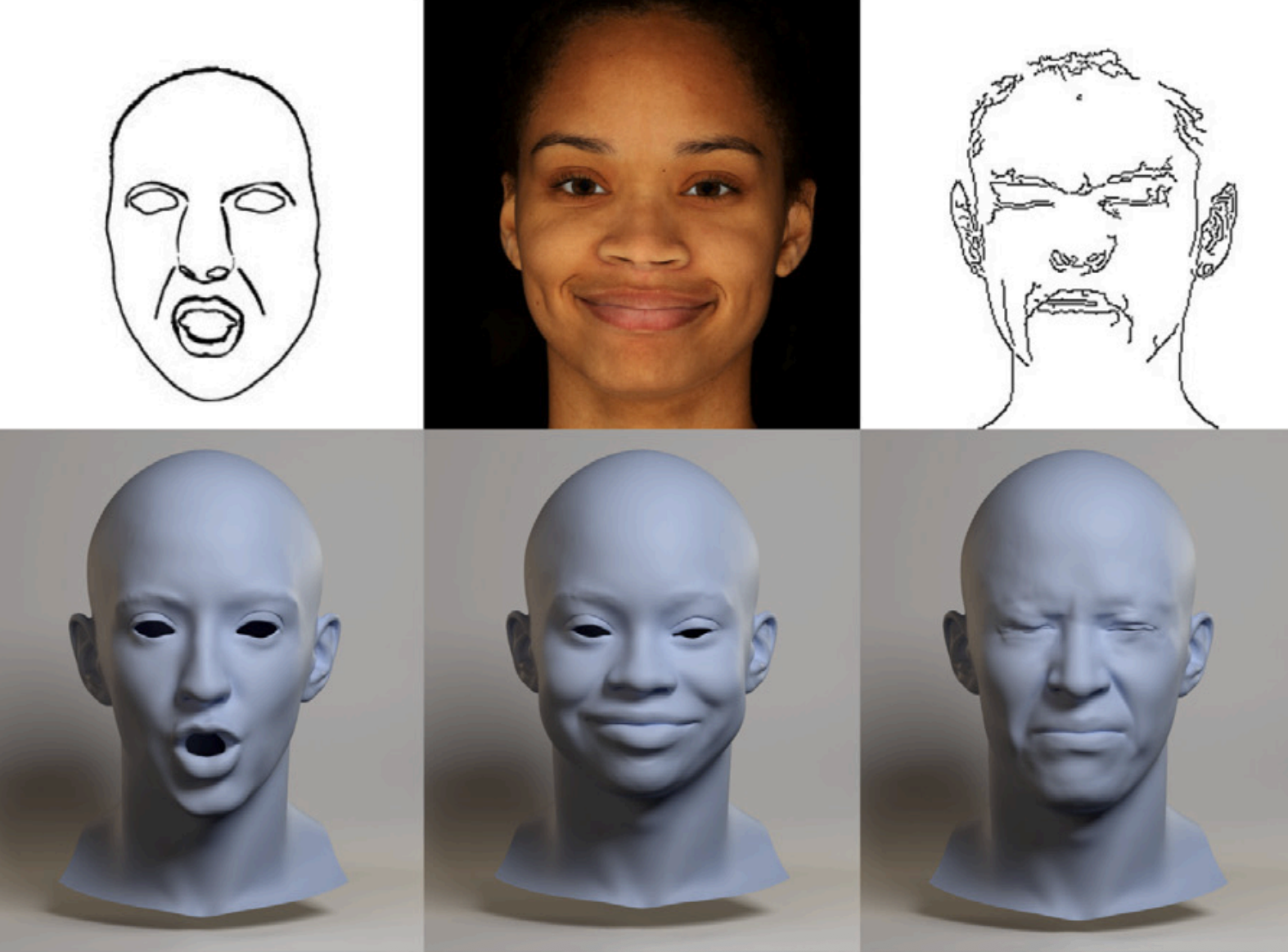
Multimodal Conditional 3D Face Geometry Generation
In this work, we present a new method for multimodal conditional 3D face geometry generation that allows user-friendly control over the output identity and expression via a number...
Face capture & animation Neural rendering
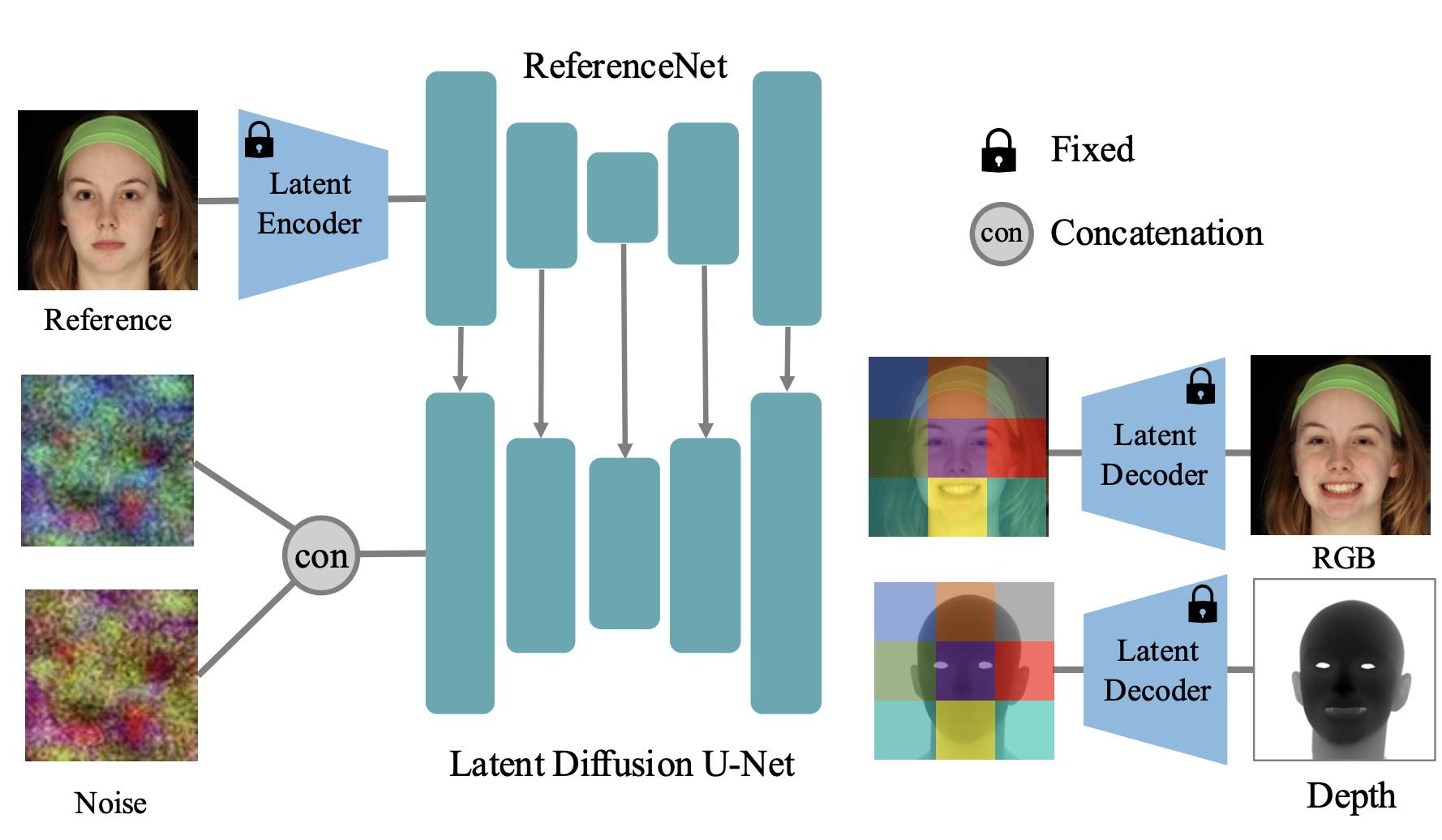
Joint Learning of Depth and Appearance for Portrait Images
In this work, we propose to jointly learn the visual appearance and depth of faces simultaneously in a diffusion-based portrait image generator. Our method embraces the end-to-end diffusion...
Face capture & animation Neural rendering Physics and Rendering
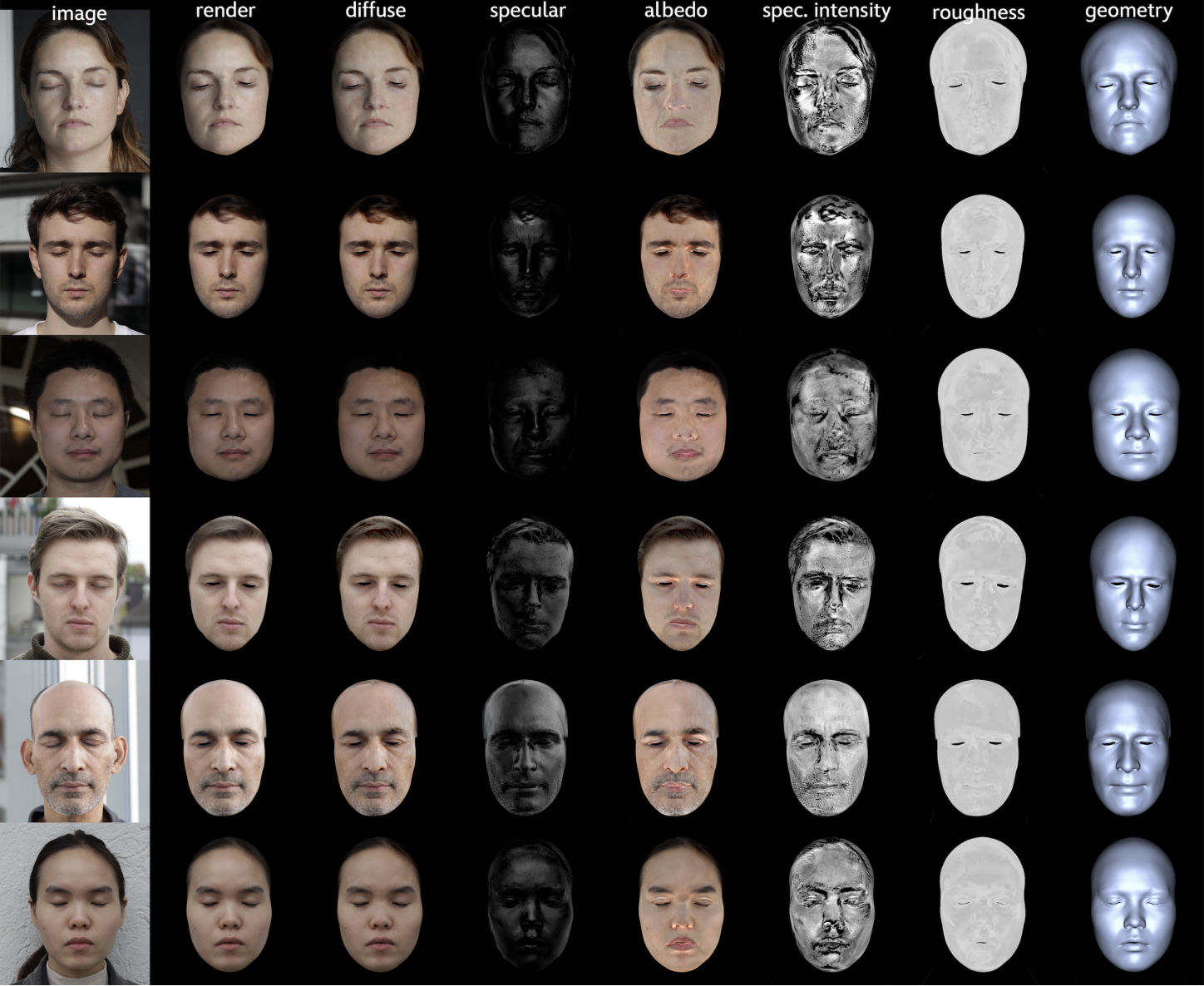
Monocular Facial Appearance Capture in the Wild
In this work, we present a new method for reconstructing the appearance properties of human faces from a lightweight capture procedure in an unconstrained environment.
Avatars & Digital humans Neural rendering Generative models
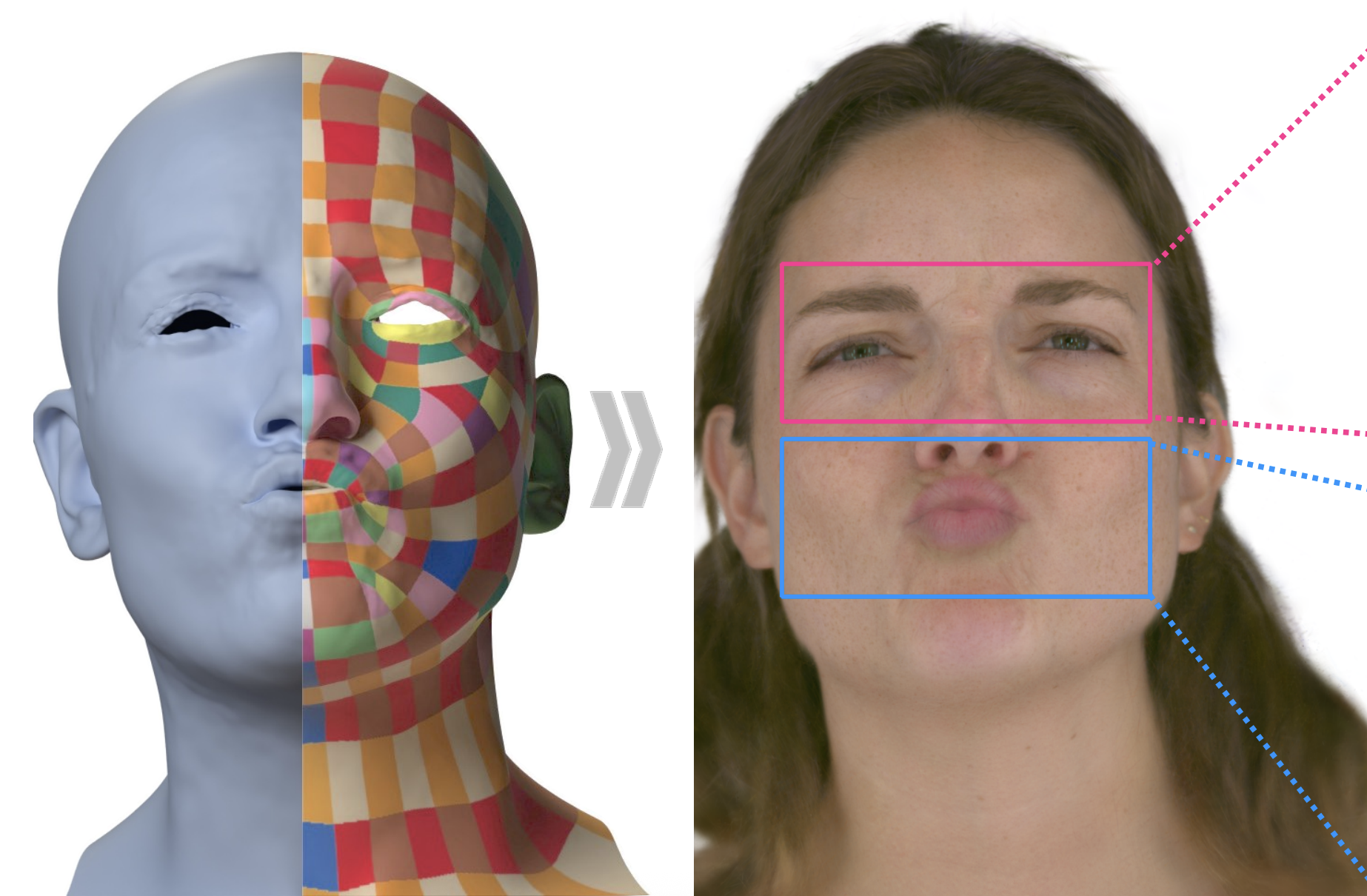
ScaffoldAvatar: High-Fidelity Gaussian Avatars with Patch Expressions
In this work, we propose to couple locally-defined facial expressions with 3D Gaussian splatting to enable creating ultra-high fidelity, expressive and photorealistic head avatars.

Shape modeling Face capture & animation
Neural Facial Deformation Transfer
We address the practical problem of generating facial blendshapes and reference animations for a new 3D character in production environments.
Shape modeling AI and Machine learning
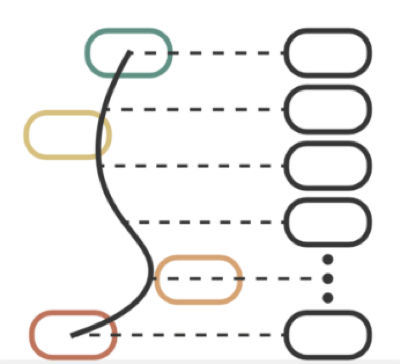
Spline-based Transformers
We introduce Spline-based Transformers, a new class of transformer models that do not require position encoding.
Face capture & animation Physics and Rendering
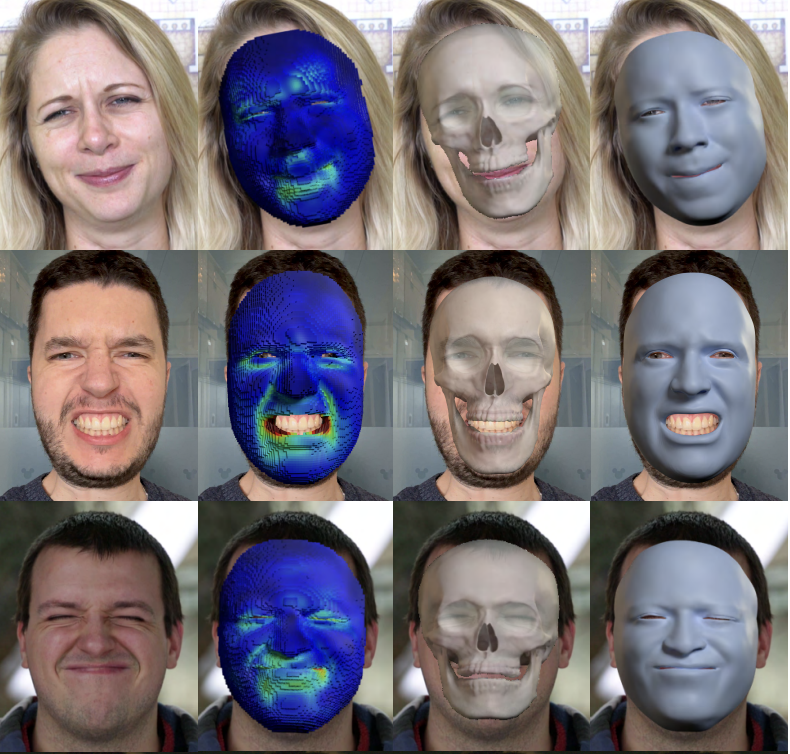
Learning a Generalized Physical Face Model From Data
In this work, we aim to make physics-based facial animation more accessible by proposing a generalized physical face model that we learn from a large 3D face dataset....
Featured Face capture & animation AI and Machine learning
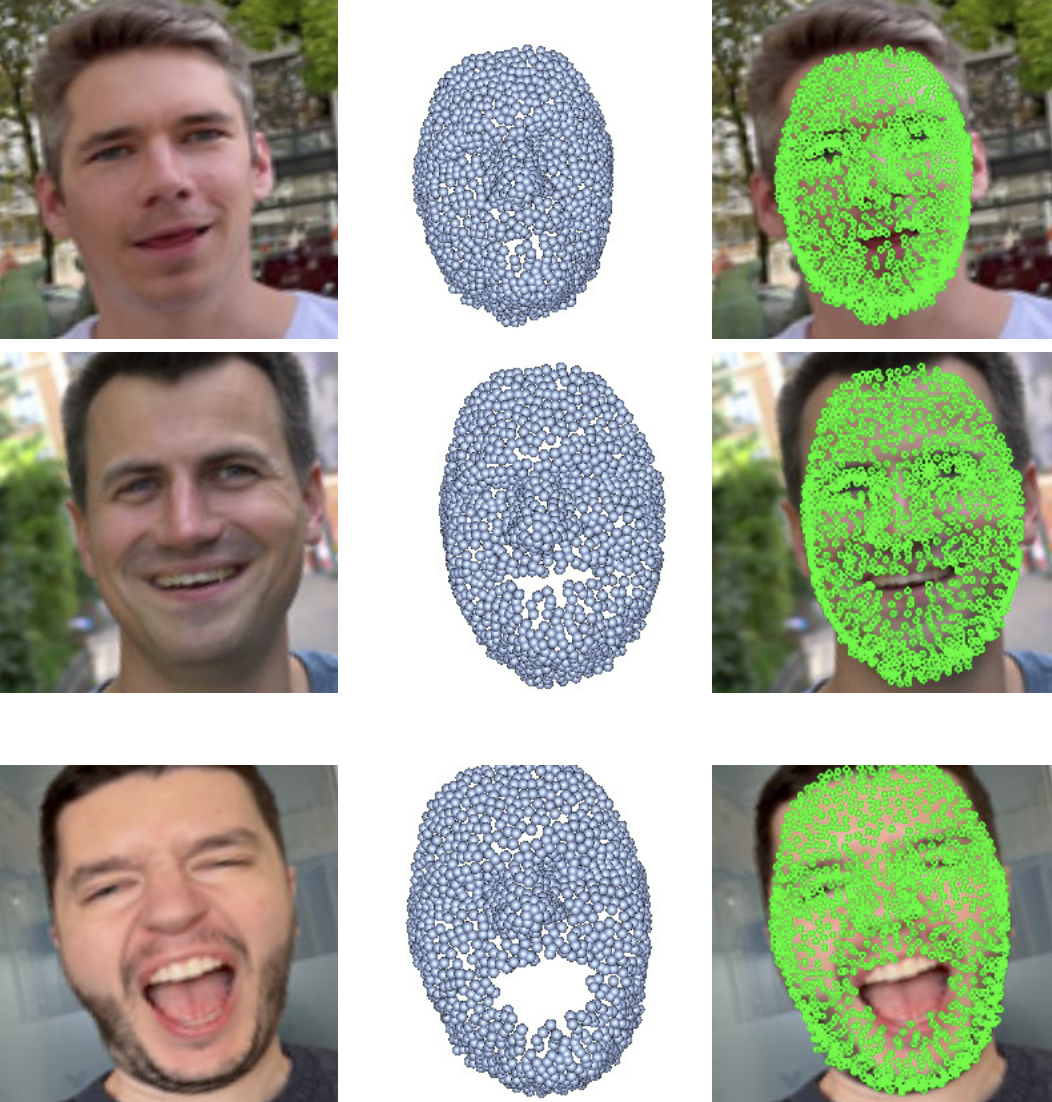
Infinite 3D Landmarks: Improving Continuous 2D Facial Landmark Detection
In this work, we examine 3 important issues in the practical use of state-of-the-art facial landmark detectors and show how a combination of specific architectural modifications can directly...
Avatars & Digital humans Neural rendering Physics and Rendering
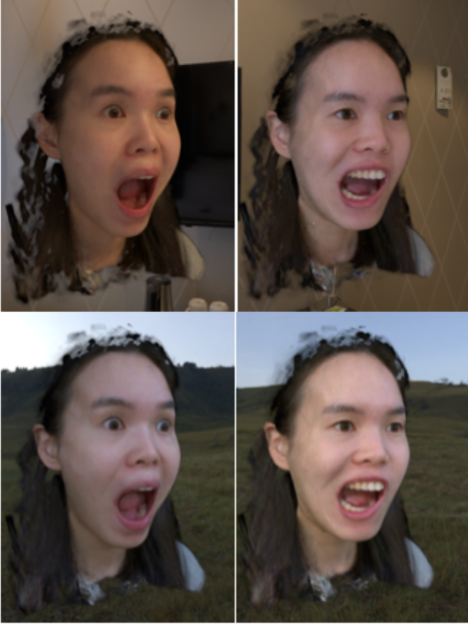
Artist-Friendly Relightable and Animatable Neural Heads
In this work, we simultaneously tackle both the motion and illumination problem, proposing a new method for relightable and animatable neural heads.
Shape modeling Face capture & animation Neural representations
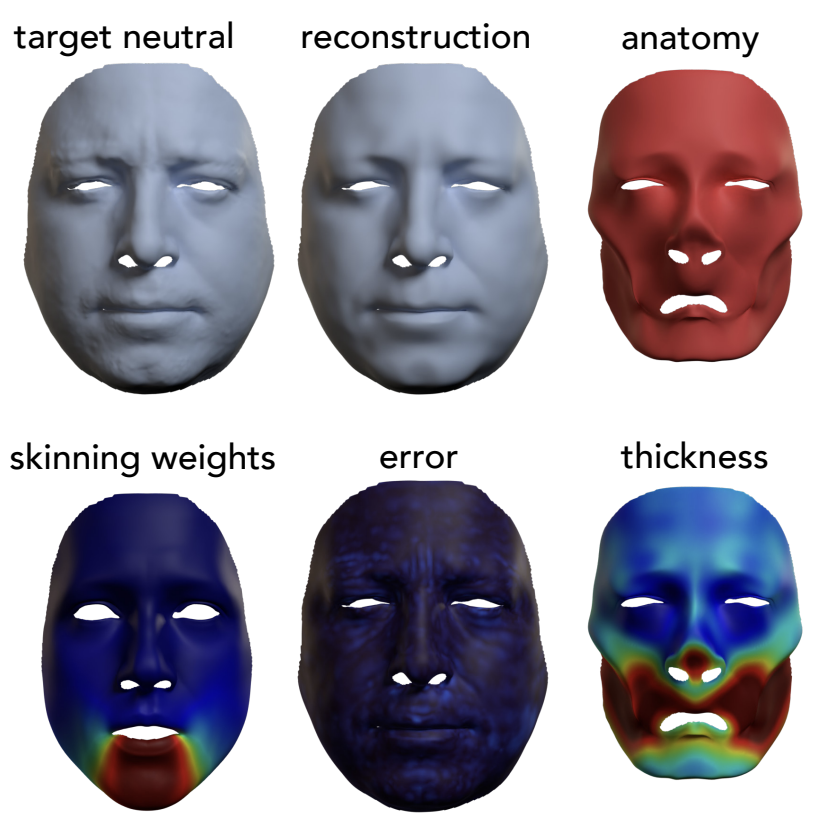
Anatomically Constrained Implicit Face Models
In this work, we present a novel use case for such implicit representations in the context of learning anatomically constrained face models.
Face capture & animation Physics and Rendering
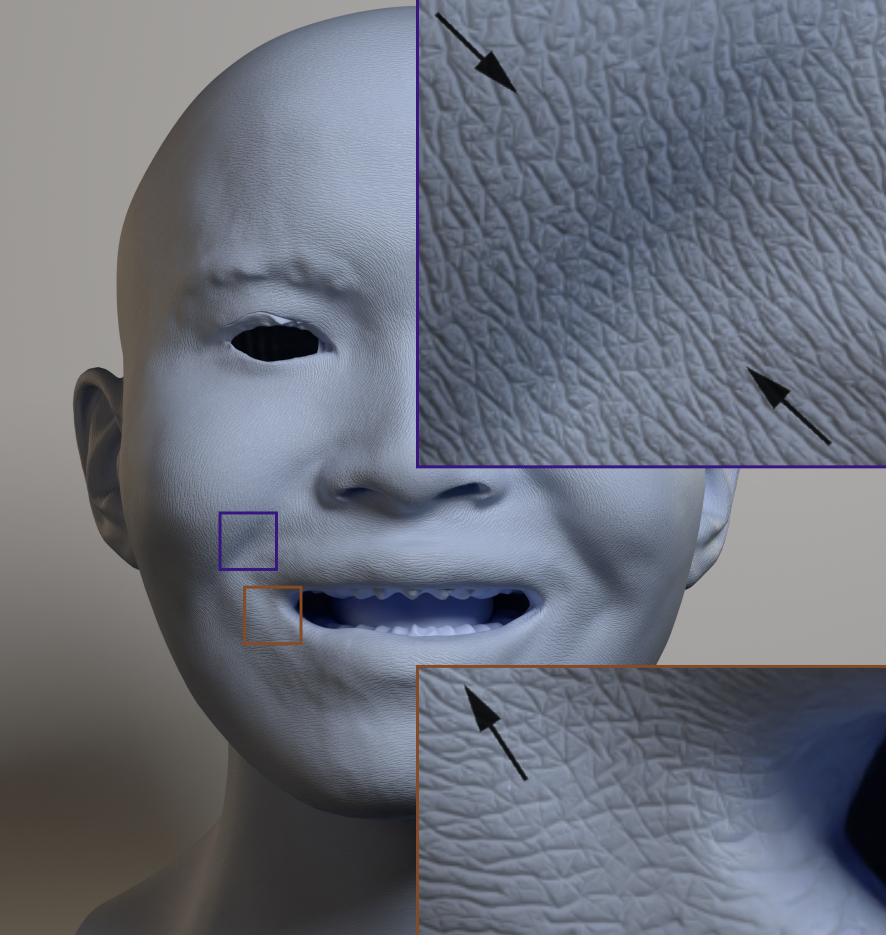
Fast Dynamic Facial Wrinkles
We present a new method to animate the dynamic motion of skin micro wrinkles under facial expression deformation.
Physics and Rendering AI and Machine learning
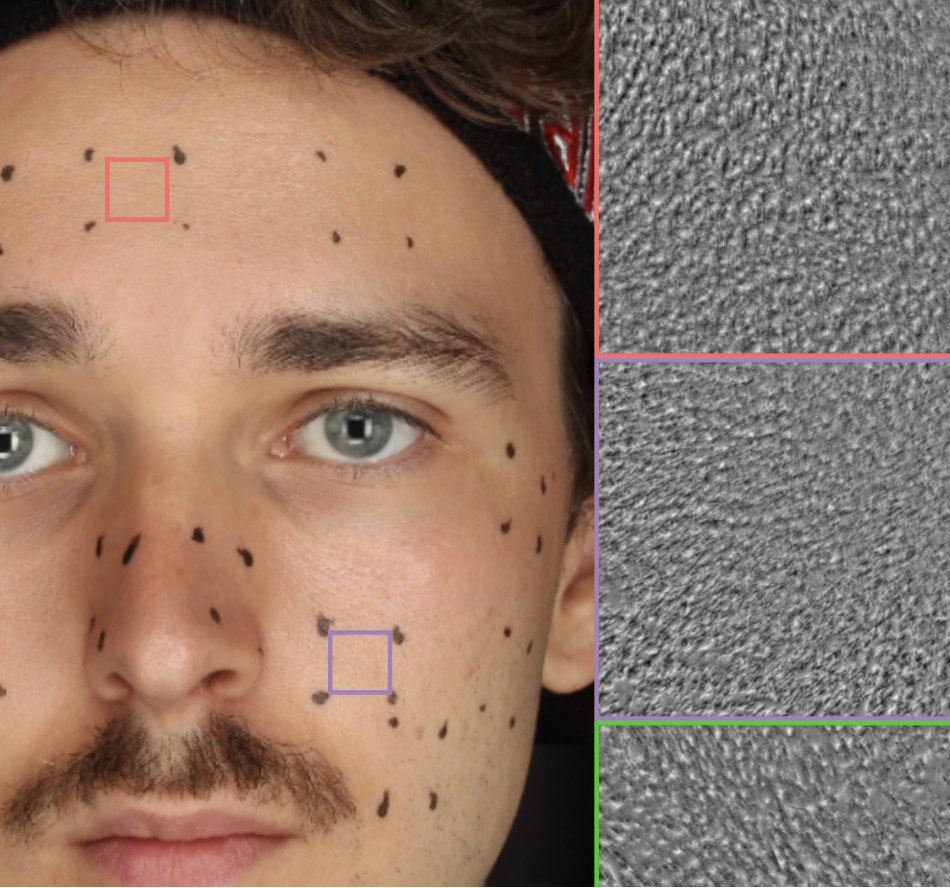
Stylize My Wrinkles: Bridging the Gap from Simulation to Reality
In this work we aim to overcome the gap between synthetic simulation and real skin scanning, by proposing a method that can be applied to large skin regions...
Shape modeling Physics and Rendering
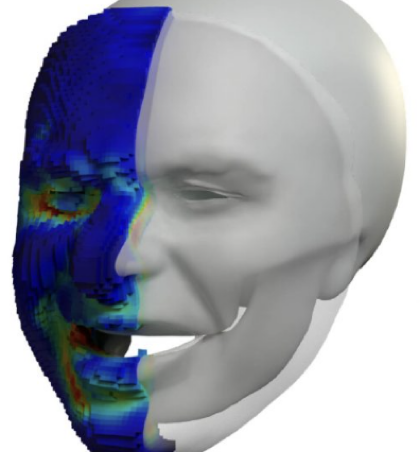
An Implicit Physical Face Model Driven by Expression and Style
We propose a new face model based on a data-driven implicit neural physics model that can be driven by both expression and style separately. At the core, we...
Face capture & animation AI and Machine learning
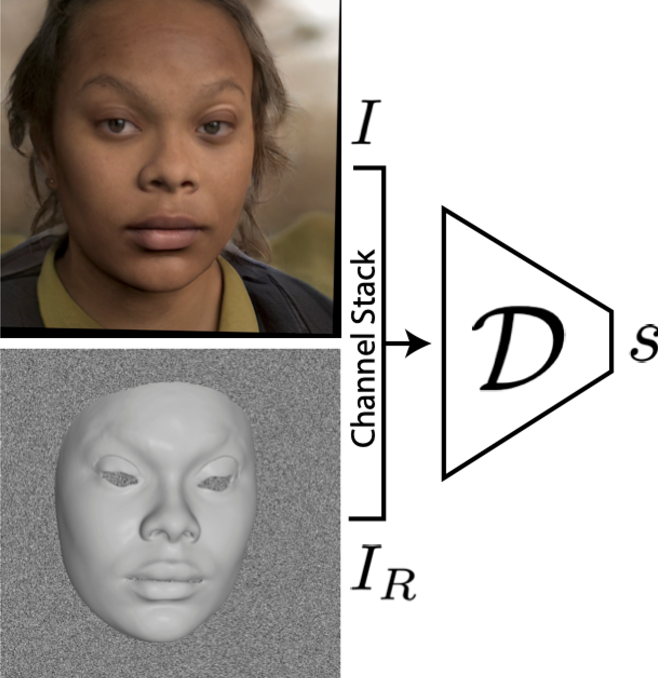
A Perceptual Shape Loss for Monocular 3D Face Reconstruction
In this work, we propose a new loss function for monocular face capture, inspired by how humans would perceive the quality of a 3D face reconstruction given a...
Avatars & Digital humans Neural rendering Physics and Rendering
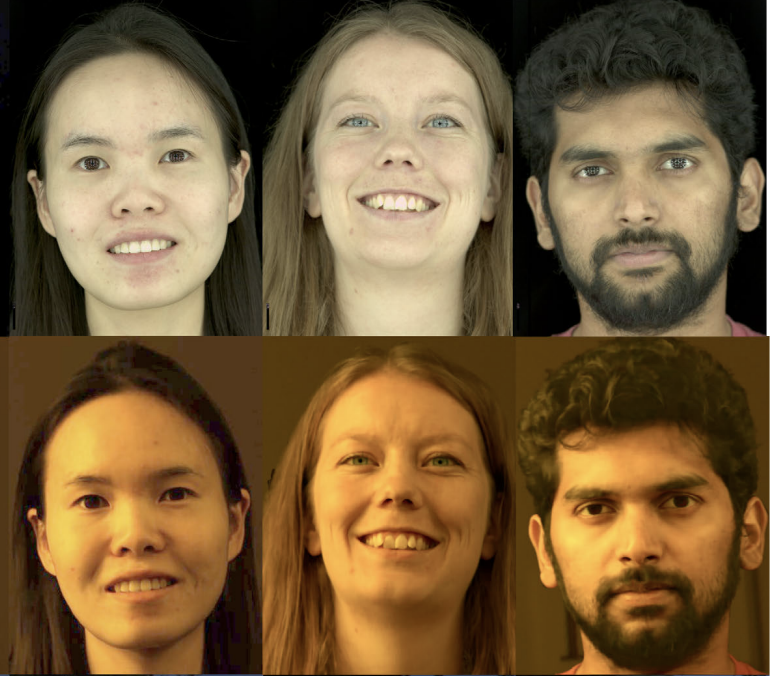
ReNeRF: Relightable Neural Radiance Fields with Nearfield Lighting
In this paper, we target the application scenario of capturing high-fidelity assets for neural relighting in controlled studio conditions, but without requiring a dense light stage. Instead, we...
Generative models Physics and Rendering
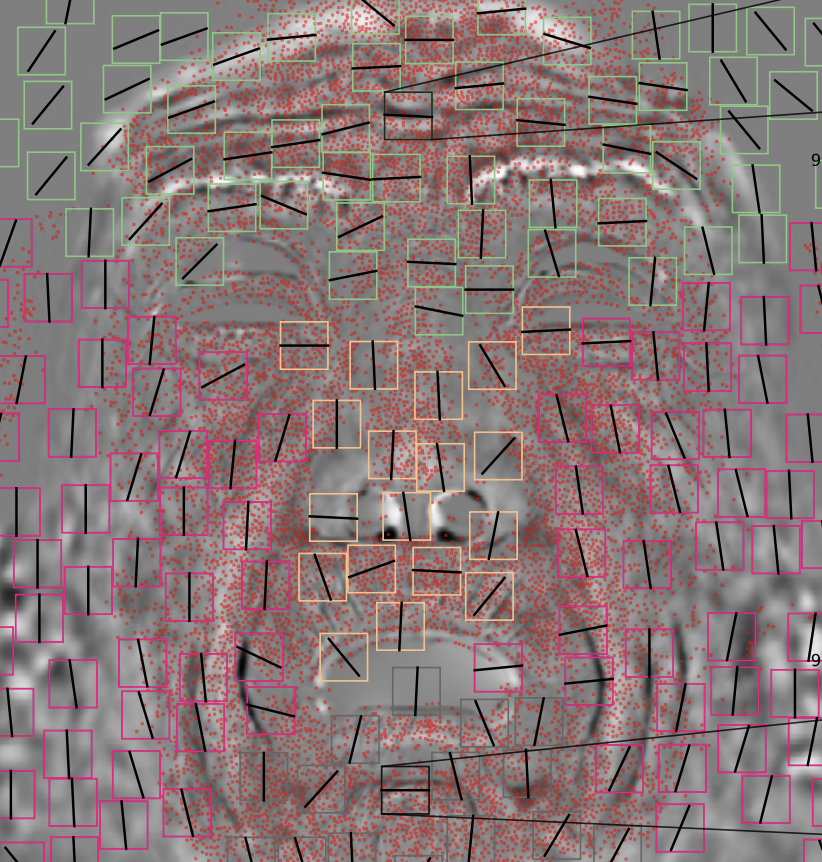
Graph-Based Synthesis for Skin Micro Wrinkles
We present a novel graph-based simulation approach for generating micro wrinkle geometry on human skin, which can easily scale up to the micro-meter range and millions of wrinkles....
Face capture & animation AI and Machine learning
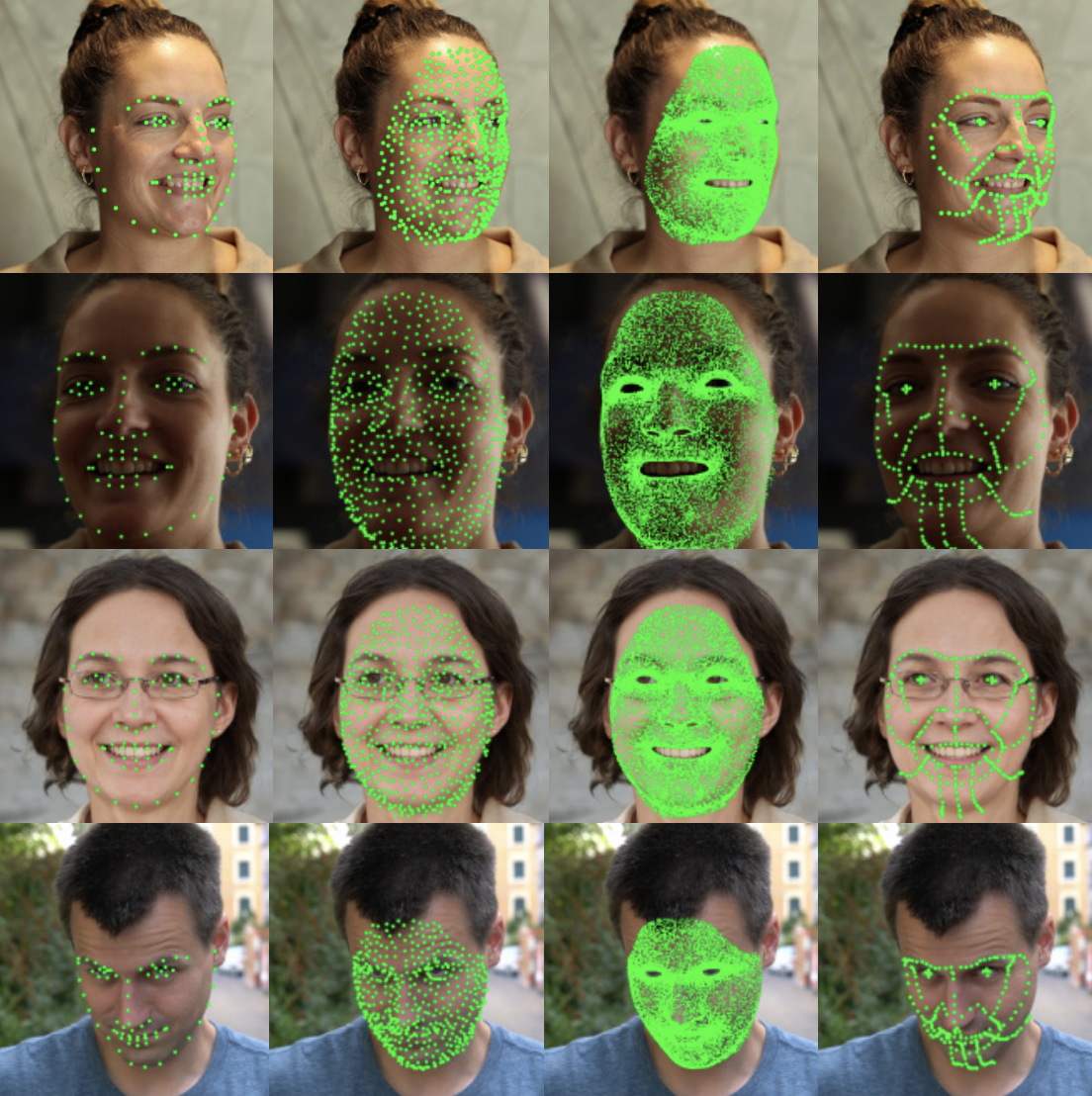
Continuous Landmark Detection With 3D Queries
We propose the first facial landmark detection network that can predict continuous, unlimited landmarks, allowing to specify the number and location of the desired landmarks at inference time....
Neural rendering Generative models
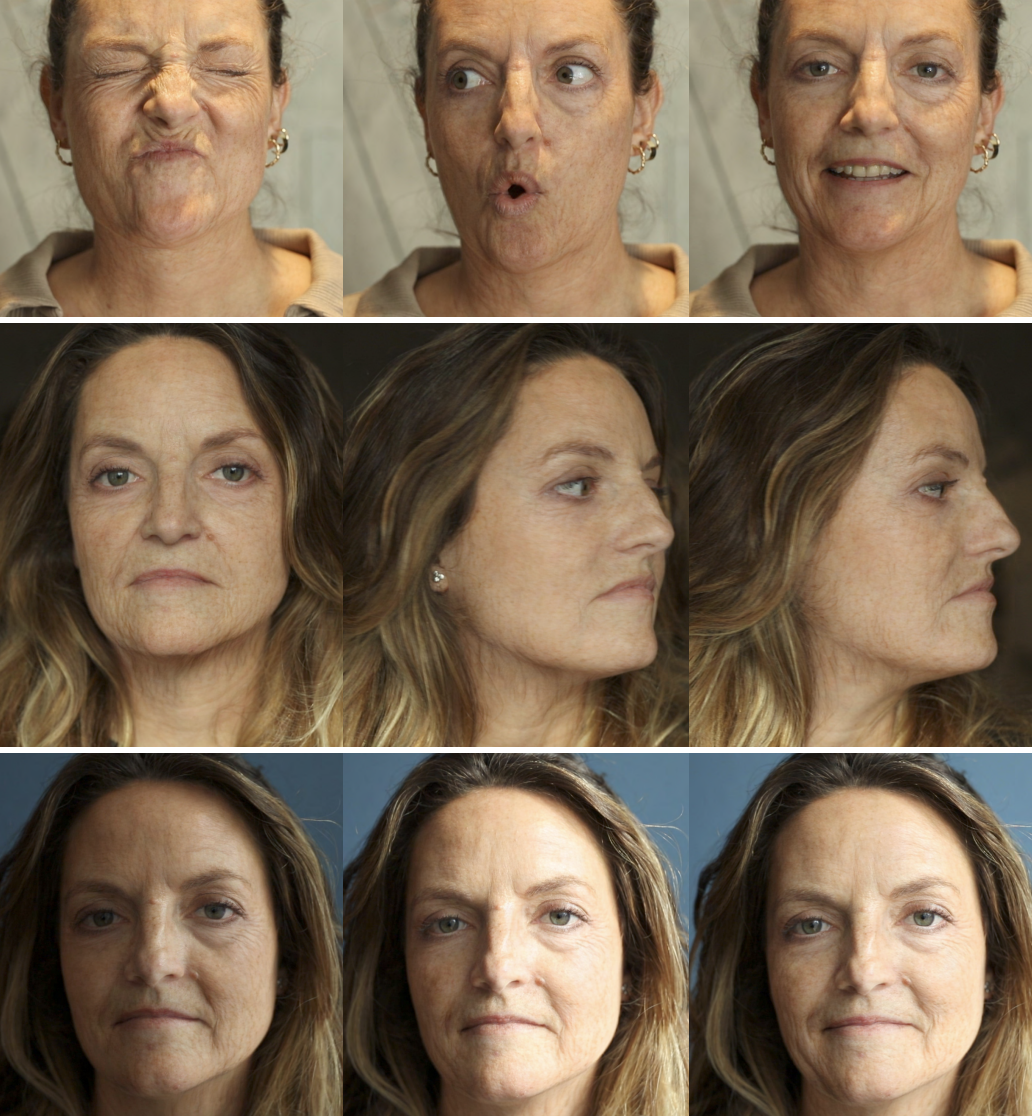
Production-Ready Face Re-Aging for Visual Effects
We demonstrate how the simple U-Net, surprisingly, allows us to advance the state of the art for re-aging real faces on video, with unprecedented temporal stability and preservation...
Face capture & animation Avatars & Digital humans Generative models
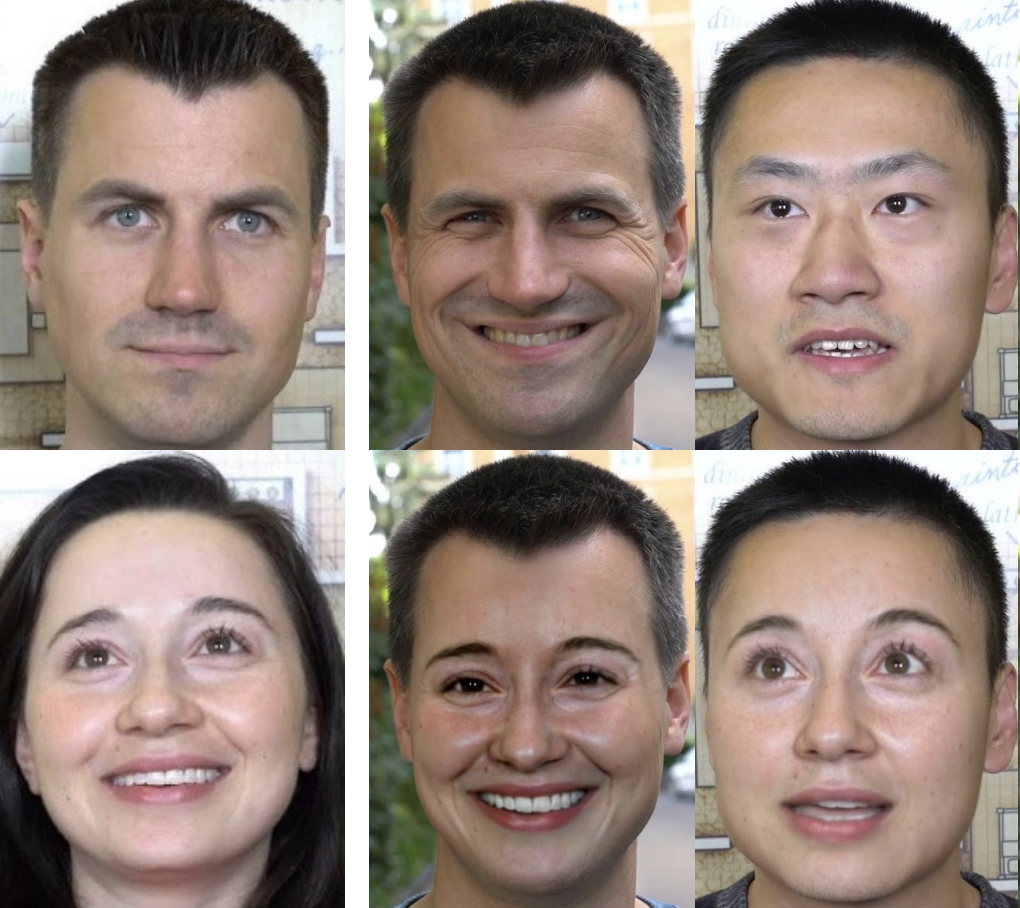
Learning Dynamic 3D Geometry and Texture for Video Face Swapping
We approach the problem of face swapping from the perspective of learning simultaneous convolutional facial autoencoders for the source and target identities, using a shared encoder network with...
Shape modeling Face capture & animation Generative models
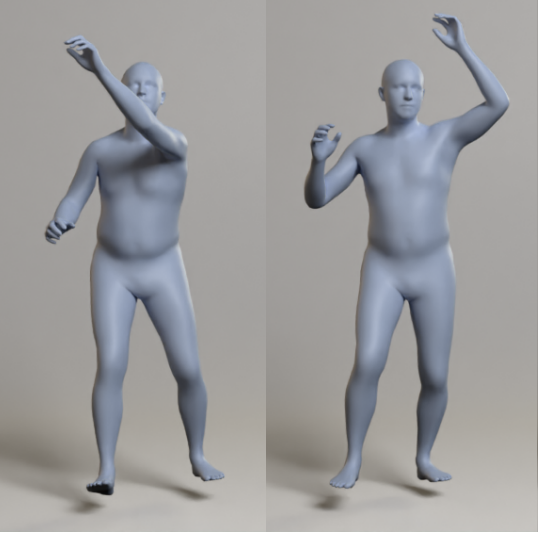
Facial Animation with Disentangled Identity and Motion using Transformers
We propose a 3D+time framework for modeling dynamic sequences of 3D facial shapes, representing realistic non-rigid motion during a performance.
Face capture & animation Avatars & Digital humans Neural representations
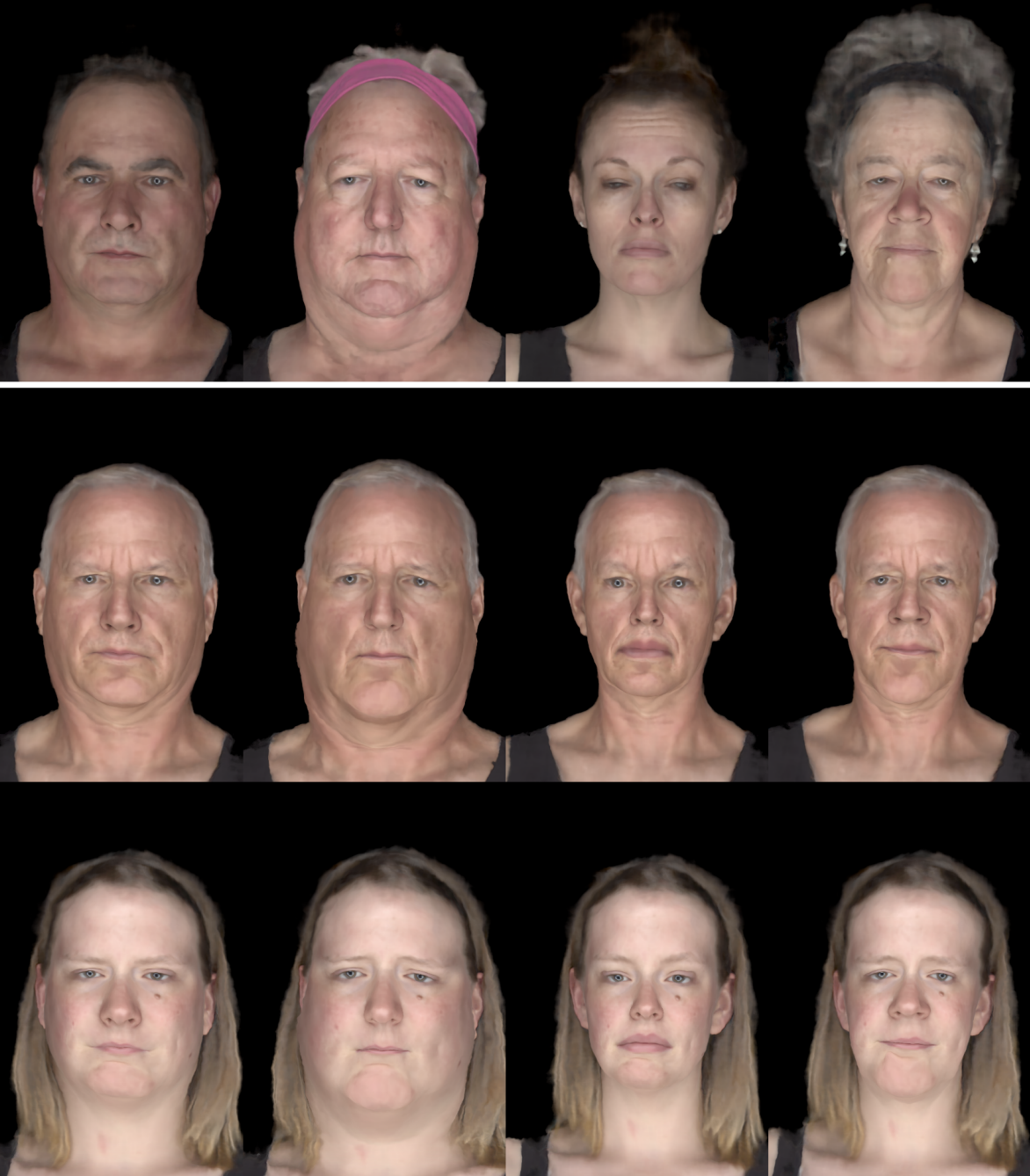
MoRF: Morphable Radiance Fields for Multiview Neural Head Modeling
We demonstrate how MoRF is a strong new step towards 3D morphable neural head modeling.
Face capture & animation Avatars & Digital humans
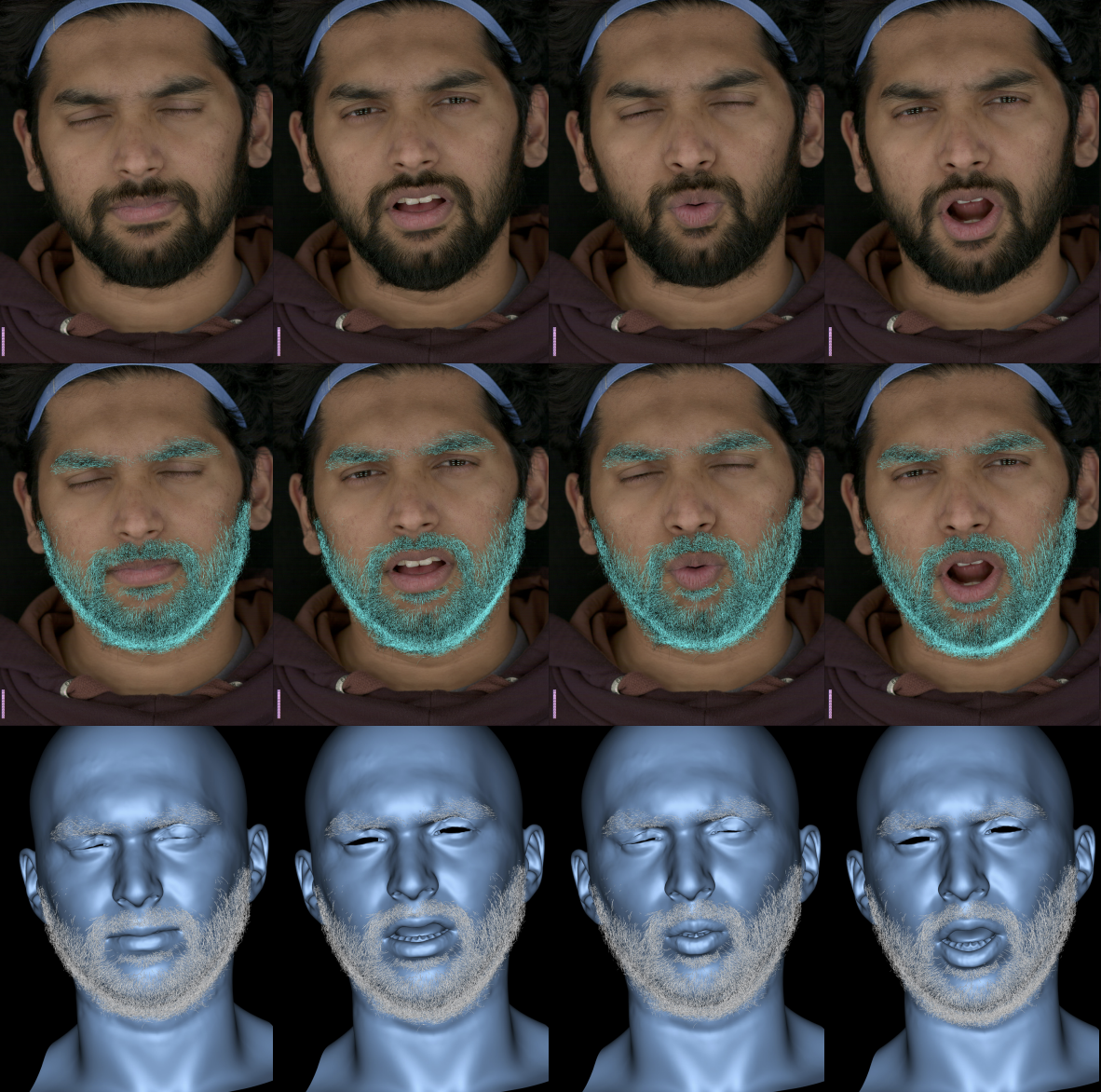
Facial Hair Tracking for High Fidelity Performance Capture
We demonstrate the proposed capture pipeline on a variety of different facial hair styles and lengths, ranging from sparse and short to dense full-beards.
Shape modeling Face capture & animation Physics and Rendering
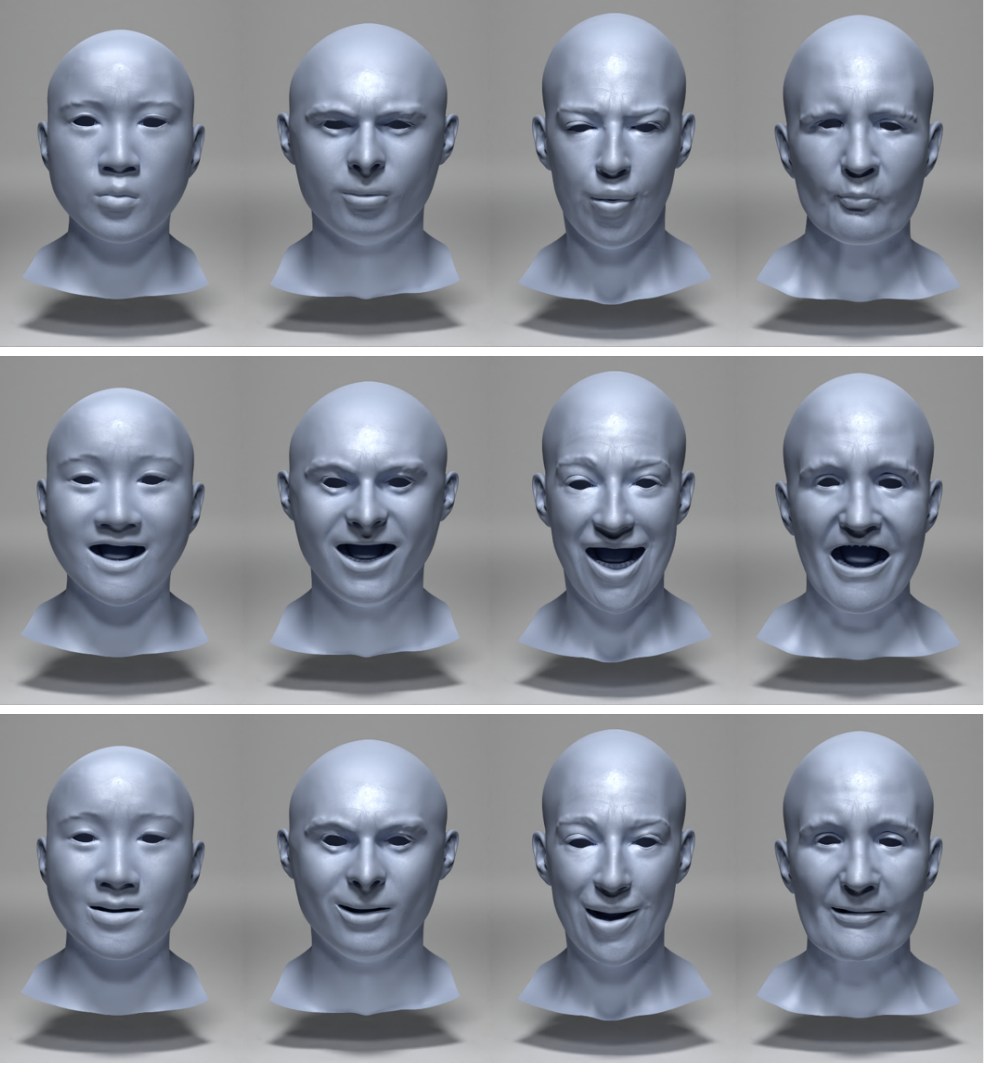
Local Anatomically – Constrained Facial Performance Retargeting
We present a new method for high-fidelity offline facial performance retargeting that is neither expensive nor artifact-prone.
Face capture & animation Physics and Rendering
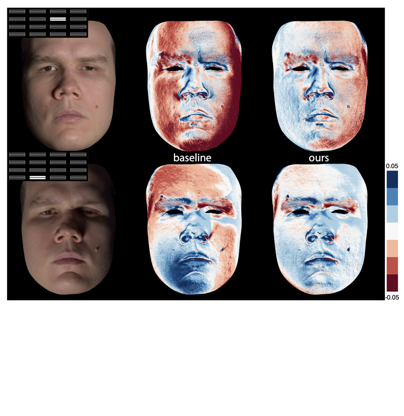
Improved Lighting Models for Facial Appearance Capture
We compare the results obtained with a state-of-the-art appearance capture method, with and without our proposed improvements to the lighting model.
Featured Shape modeling Generative models Neural representations
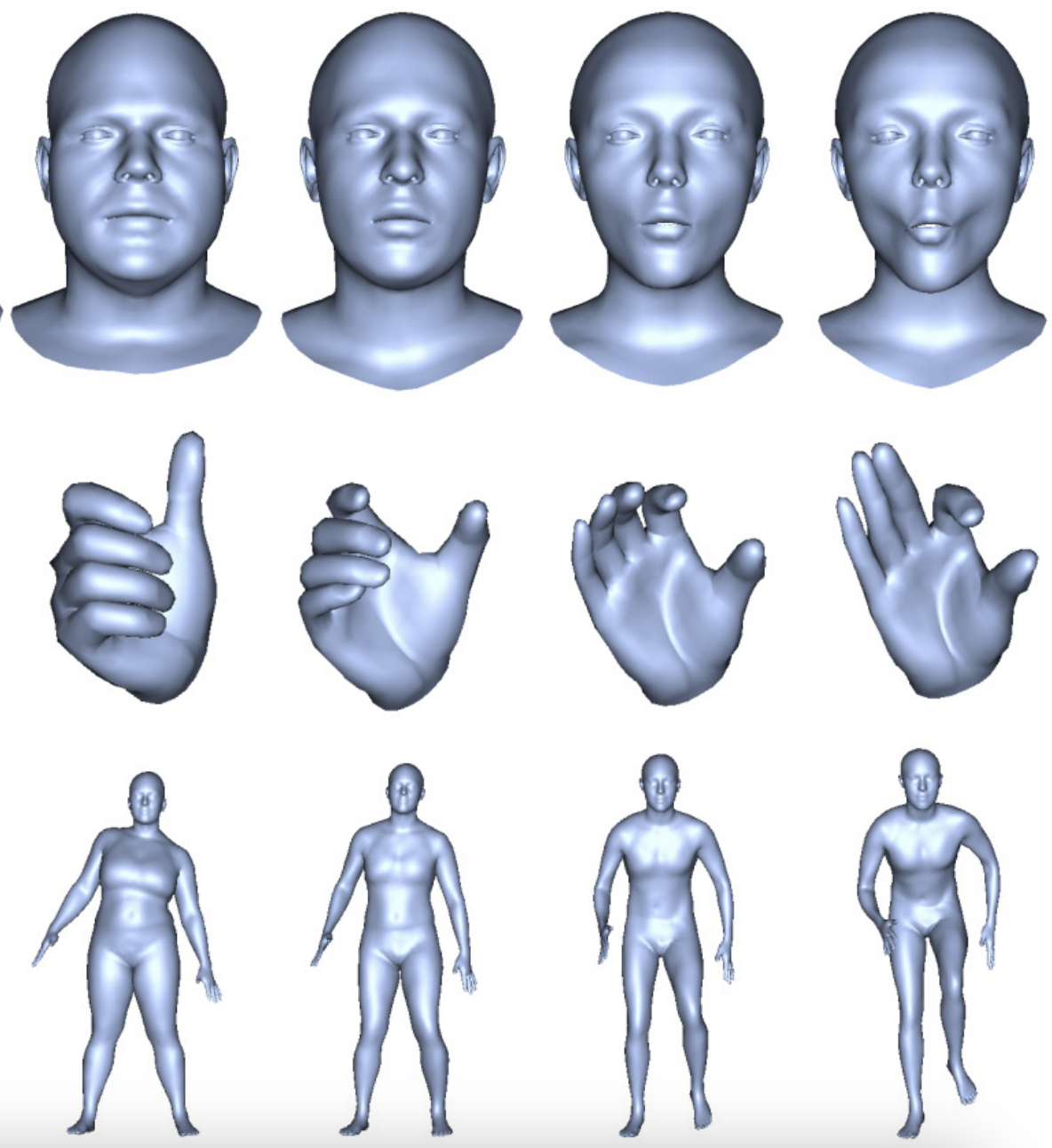
Shape Transformers: Topology-Independent 3D Shape Models Using Transformers
We present a new nonlinear parametric 3D shape model based on transformer architectures.
Neural rendering Generative models Physics and Rendering
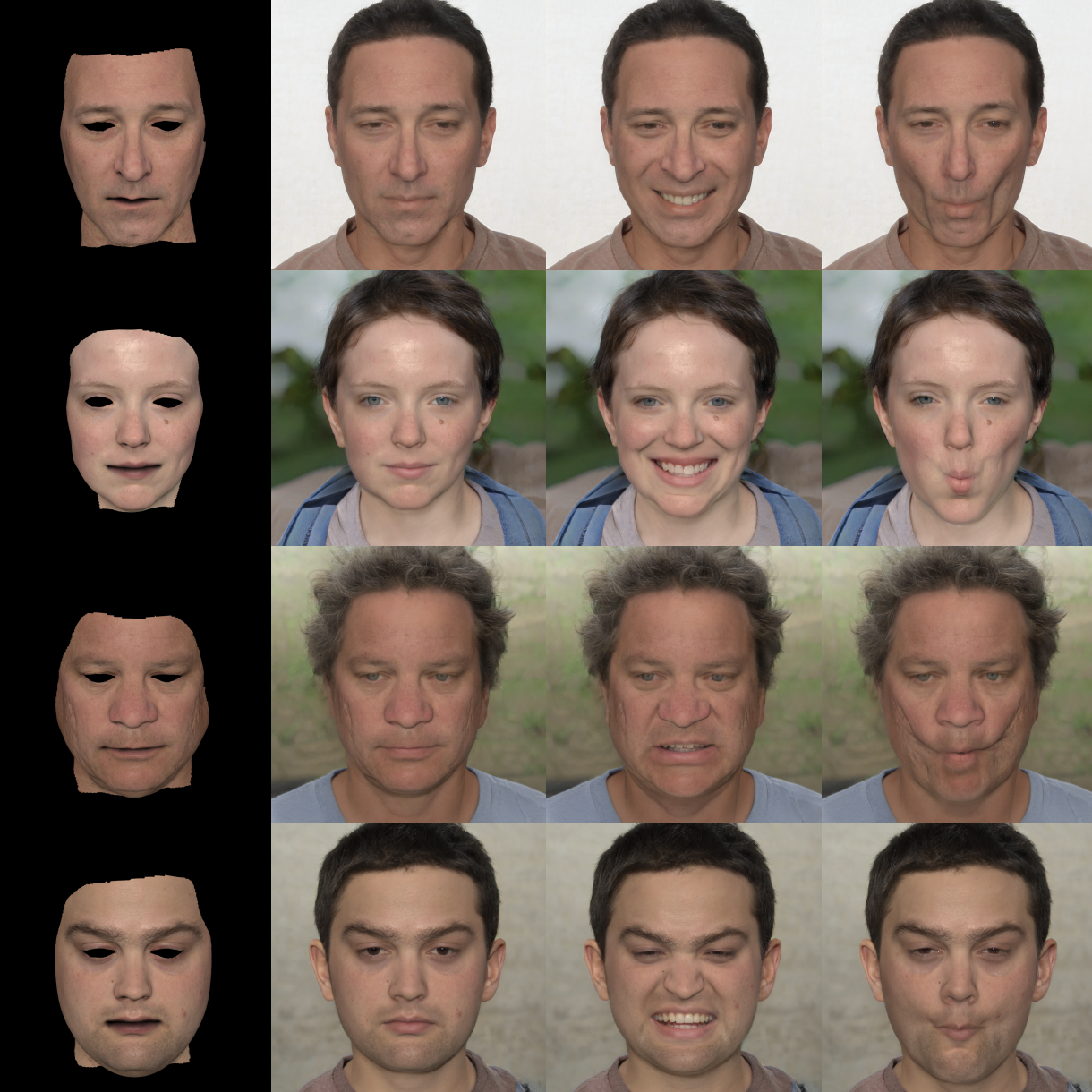
Rendering with Style: Combining Traditional and Neural Approaches for High-Quality Face Rendering
We propose to combine incomplete, high-quality renderings showing only facial skin with recent methods for neural rendering of faces, in order to automatically and seamlessly create photo-realistic full-head...
Featured Neural rendering Generative models AI and Machine learning
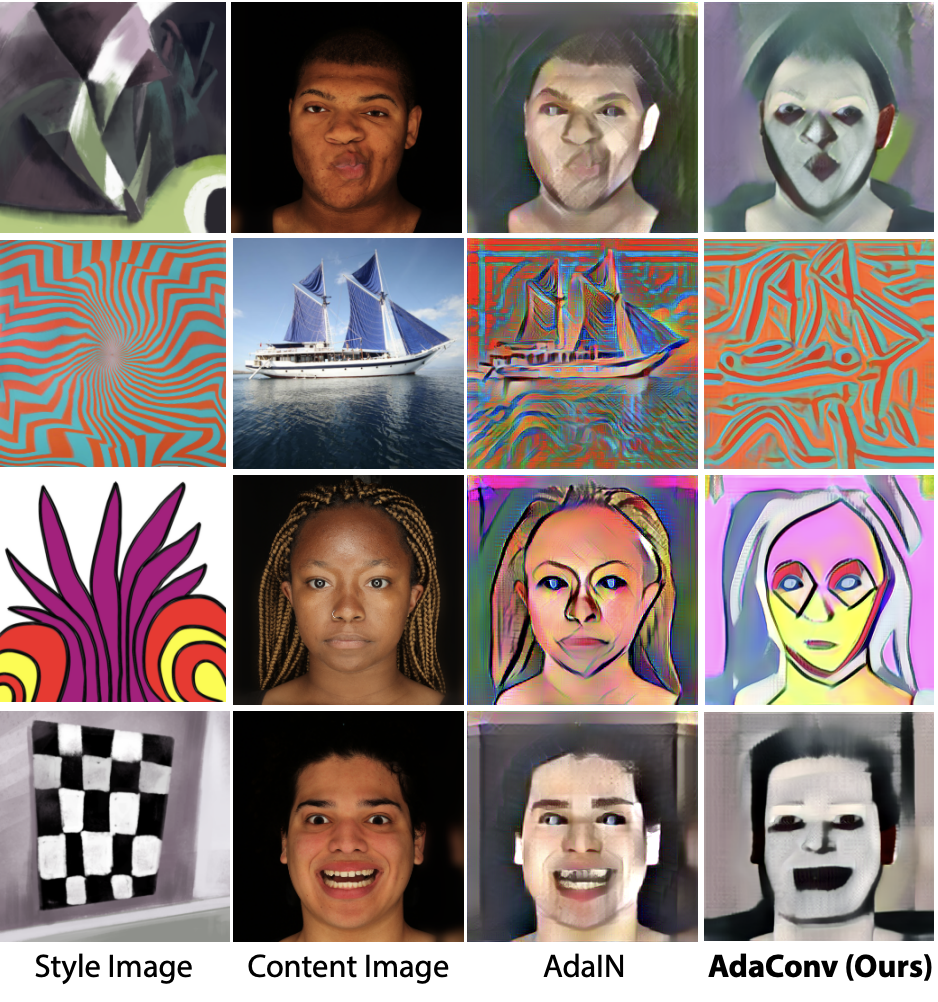
Adaptive Convolutions for Structure-Aware Style Transfer
We propose Adaptive convolutions; a generic extension of AdaIN, which allows for the simultaneous transfer of both statistical and structural styles in real time.
Shape modeling Generative models Neural representations
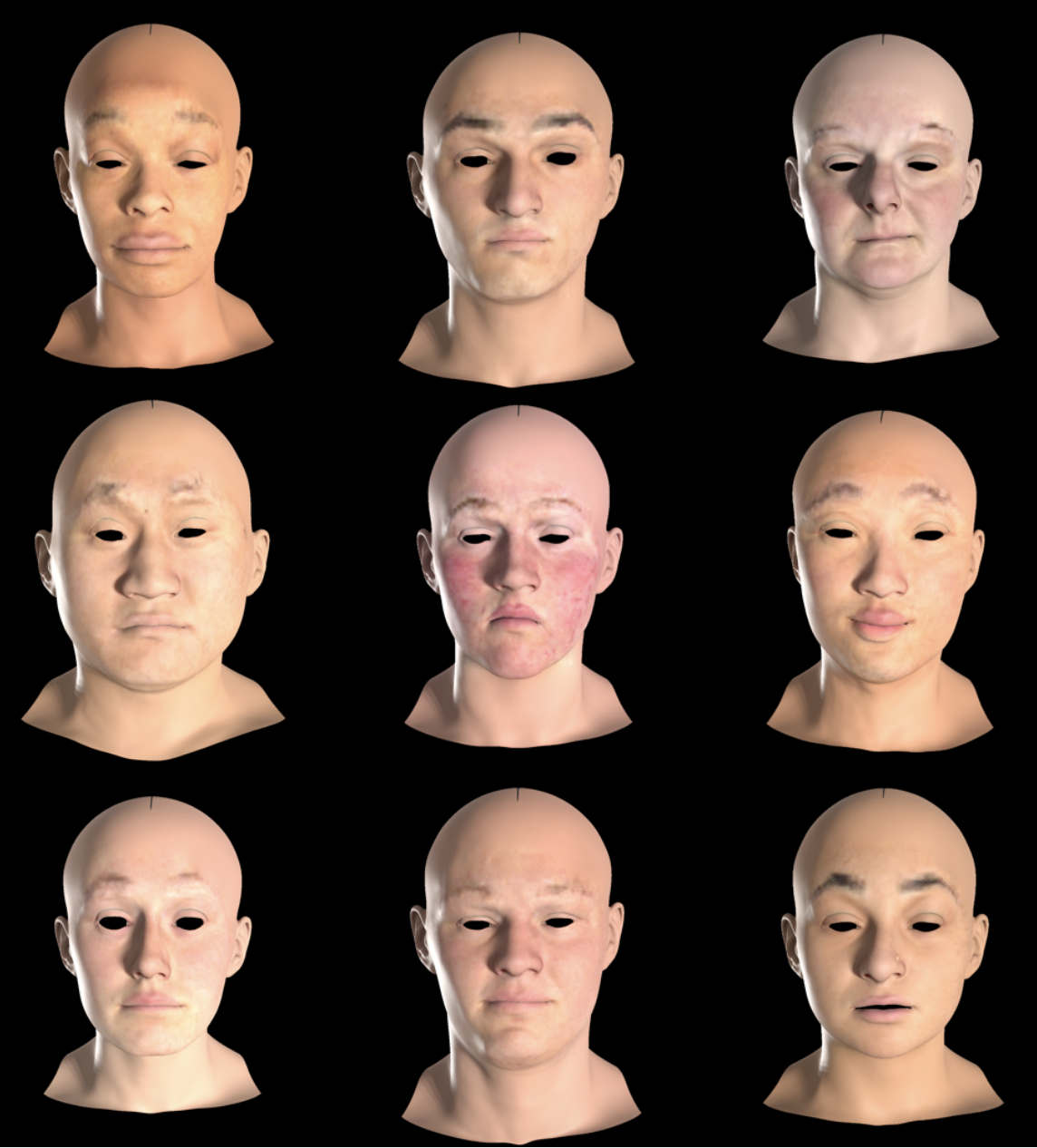
Semantic Deep Face Models
We present a method for nonlinear 3D face modeling using neural architectures.
Face capture & animation
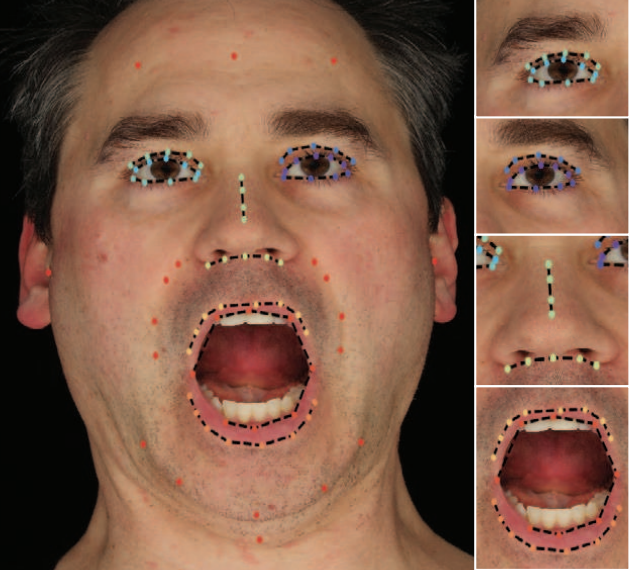
Attention-Driven Cropping for Very High Resolution Facial Landmark Detection
Facial landmark detection is a fundamental task for many consumer and high-end applications and is almost entirely solved by machine learning methods today.
AI and Machine learning
Road tracking using particle filters for Advanced Driver Assistance Systems
Road segmentation and tracking is of prime importance in Advanced Driver Assistance Systems (ADAS) to either assist autonomous navigation or provide useful information to drivers operating semi-autonomous vehicles....
AI and Machine learning
Segmentation and grading of diabetic retinopathic exudates using error-boost feature selection method
This paper proposes a method to segment the exudates and lesions in retinal fundus images and classify using selective brightness feature. [[Paper]](https://ieeexplore.ieee.org/abstract/document/6141299)